
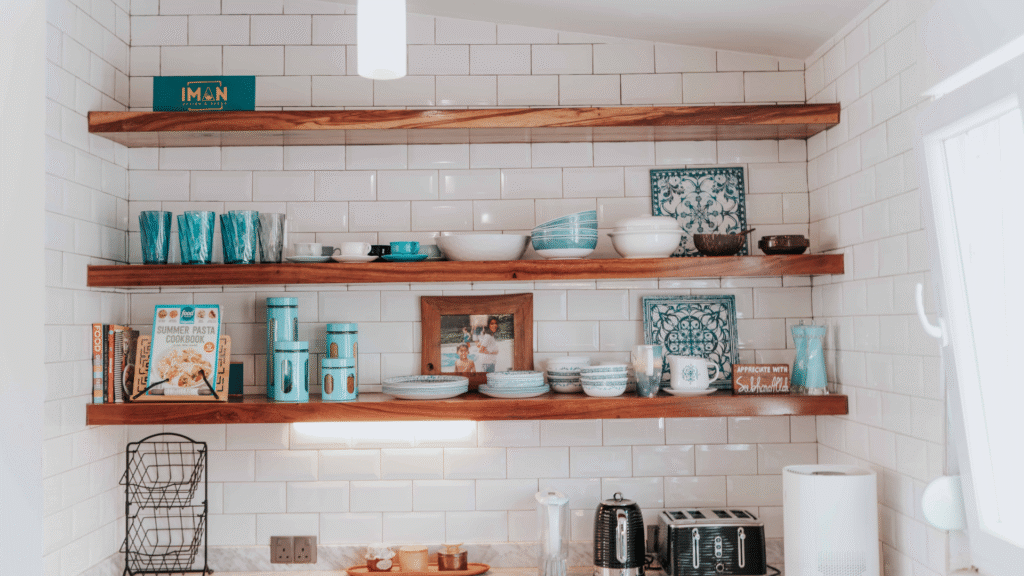
Open shelves are a versatile design element that can enhance both aesthetics and practicality in a space. By choosing complementary items and organizing them thoughtfully, open shelves can serve as striking displays while remaining functional for everyday use. This approach allows individuals to showcase their personality through curated decor and make efficient use of available space.
Balancing beauty and function is key to effective open shelf styling. A careful selection of functional items, such as cookbooks or decorative storage, can create a cohesive look while keeping essentials within easy reach. Incorporating various textures and colors will add visual interest and prevent a cluttered appearance.
The right combination of decor and utility can transform any open shelving unit into an attractive focal point. With mindful arrangement, these shelves can reflect personal style and provide practical solutions for organization in kitchens, living rooms, and beyond.
Principles of Styling Open Shelves
Effective styling of open shelves combines aesthetics and utility, creating an inviting display while ensuring accessibility. The following principles focus on achieving this balance through smart selection and arrangement.
Balancing Beauty and Function
When styling open shelves, a harmonious mix of beauty and practicality is essential. Open shelving serves as both storage and display, so items should be reachable while still creating visual interest.
Considerations for balance include:
- Height Variation: Mix taller items with shorter ones to create visual dynamics.
- Layering: Place larger objects in the back and smaller ones in front for depth.
- Color Coordination: Use a cohesive color palette to unify distinct items.
This careful balance ensures that open shelves remain functional while exuding aesthetic appeal.
Selecting the Right Items
Choosing the right items for open shelves is crucial. Every day essentials should take precedence to maintain accessibility. Basic items such as dishes, cookbooks, or jars can serve dual functions.
Key selection tips involve:
- Prioritize Functionality: Frequently used items should be easily accessible.
- Incorporate Variety: Mix materials like wood, glass, and metal to add texture.
- Limit Clutter: Avoid overcrowding; select a few statement pieces alongside functional objects.
Focusing on the right mix enhances both the beauty and function of the space.
Mixing Decorative Pieces and Everyday Essentials
Combining decorative elements with everyday essentials enriches open shelving. This blend allows for personality while maintaining practicality.
Strategies include:
- Display Essentials Artistically: Arrange items like plates and bowls as art pieces.
- Use Decorative Containers: Baskets or decorative boxes can hide clutter while adding style.
- Rotate Items Seasonally: Change decorations according to seasons or themes for freshness.
This approach ensures that open shelves reflect both personal style and practical usage.
Arranging Open Shelves for Organization and Easy Access
Effective open shelf arrangement enhances both organization and accessibility. Thoughtful zoning, maintaining cleanliness, and grouping items contribute significantly to a functional display that remains visually appealing.
Zoning Shelves for Practical Use
Zoning is crucial for efficient storage. Separate shelves into distinct areas based on the type of items stored. For example, one shelf can hold cookbooks while another accommodates decorative jars or plants.
To implement zoning:
- Assign specific categories (e.g., baking supplies, lunch items).
- Prioritize frequently used items on lower shelves for easy access.
- Use clear labels or decorative containers to indicate different zones.
This method streamlines the search and retrieval of items, saving time and enhancing usability.
Maintaining a Clutter-Free Display
A clean shelf design prevents overwhelming visuals and promotes a sense of order. Reduction in clutter allows each item to stand out and enhances overall aesthetics.
Follow these strategies for a clutter-free display:
- Limit the number of items on each shelf. Aim for 5-7 pieces to avoid overcrowding.
- Regularly review and remove items that are no longer needed or used.
- Integrate functional organizers like baskets or trays to group smaller items.
This approach not only creates a visually pleasing environment but also simplifies maintenance.
Grouping Objects for Visual Interest
Grouping enhances visual interest and elevates the design of open shelves. When items are placed together thoughtfully, they create a cohesive look, making the space feel intentional.
To achieve effective grouping:
- Use varying heights by mixing items such as books, plants, and decorative objects.
- Create groupings based on color or texture to add depth.
- For larger items, choose a single focal piece and arrange supporting pieces around it.
These techniques ensure that shelves are not only organized but also engaging to the eye, striking a balance between beauty and function.
Decorating Strategies for Different Spaces
Effective strategies for styling open shelves can transform spaces while enhancing their function. This section focuses on two key areas: maximizing the aesthetic appeal of kitchen shelves and integrating open shelving as a viable alternative to traditional cabinets.
Styling Kitchen Shelves for Maximum Impact
In a kitchen, open shelves can showcase both beauty and practicality. They provide an opportunity to display beautiful dishware, glassware, or decorative items.
- Layered Displays: Start by grouping items in odd numbers to create visual interest. Place larger items at the back and smaller ones in front for depth.
- Color Coordination: Use a cohesive color palette to unify the shelves. Incorporate colorful plates, jars, or cookbooks for an eye-catching effect.
- Functional Decor: Include frequently used items, like spices or oils, within easy reach. This adds functionality without sacrificing style.
Adjusting the arrangement seasonally keeps the décor fresh and engaging.
Incorporating Open Shelving in Place of Cabinets
Replacing cabinets with open shelving invites creativity and openness into the kitchen. This strategy can be particularly effective in smaller spaces.
- Maximizing Space: Use vertical shelving to draw the eye upward, creating an illusion of height. This can make a compact kitchen feel more expansive.
- Material Choices: Opt for materials that complement the kitchen’s design. Wooden shelves add warmth, while metal offers a more modern flair.
- Organized Clutter: To maintain an organized look, use baskets or containers to store smaller items. Labeling these can enhance both aesthetic appeal and function.
This approach enables a personal touch while ensuring items remain accessible and orderly.